How Solar Batteries Cut Power Bills by Up to 90 Percent
- Oct 21, 2024
- 5 min read
Updated: Feb 10
Electricity prices across Australia continue to rise, leaving many households searching for smarter ways to take control of their energy costs. While solar panels alone can significantly reduce daytime electricity usage, the real breakthrough comes when solar is combined with battery storage. Together, they allow homeowners to dramatically reduce reliance on the grid and, in many cases, cut power bills by up to 90 percent.
This guide explains how solar batteries work, why self consumption matters, how peak usage savings add up, and why battery backed homes consistently outperform solar only systems.
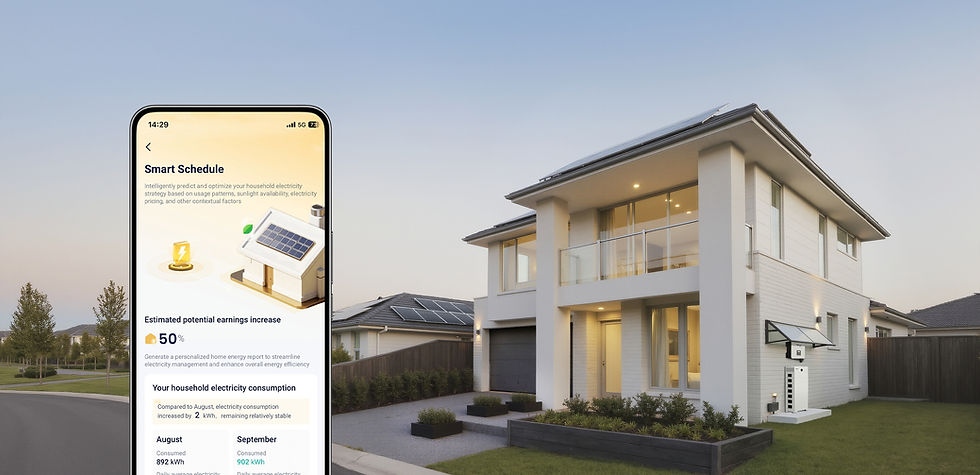
Understanding How Solar Batteries Work
A solar battery stores excess electricity generated by your solar panels during the day. Instead of exporting unused energy back to the grid for a small feed in tariff, that energy is saved and used later when your household needs it most.
Without a battery, most homes still rely on grid electricity during the evening and early morning when solar panels are not producing power. This is often when electricity rates are highest. A battery changes that equation by allowing you to use your own solar energy around the clock.
In simple terms, solar panels generate the power, and the battery ensures you actually keep and use it.
The Power of Self Consumption
Self consumption refers to how much of your solar energy you use directly in your home rather than sending it back to the grid. The higher your self consumption rate, the lower your electricity bill.
Solar only homes typically self consume around 30 to 40 percent of the energy they generate. The rest is exported. With a solar battery installed, self consumption can increase to 70 percent or more, depending on system size and usage patterns.
This shift is critical because electricity purchased from the grid costs far more than what energy retailers pay you for exported solar. By storing and using your own power, you avoid buying electricity at premium rates.
Avoiding Peak Electricity Charges
One of the biggest advantages of solar batteries is protection from peak electricity pricing. In many states, electricity costs surge during late afternoon and evening hours when demand is highest.
Without a battery, households often end up buying expensive grid electricity precisely when solar generation drops off. A battery allows you to run your home using stored solar energy during these peak periods.
Over time, avoiding peak charges leads to substantial savings. This is one of the main reasons battery equipped homes consistently outperform solar only systems in real world conditions.
Why Battery Backed Homes Save More Than Solar Only Homes
Solar only systems reduce bills, but they still leave households exposed to rising electricity prices, peak tariffs, and grid dependency.
Battery backed homes benefit in several additional ways:
Reduced grid usage day and night
Protection from future electricity price increases
Greater control over when and how energy is used
Lower reliance on feed in tariffs that may decline over time
When combined with smart system design and proper battery sizing, many households find their remaining electricity bills drop to a fraction of what they once were.
Real World Savings Add Up Over Time
While savings vary depending on usage, location, and system size, the long term impact of a battery is clear. Over the life of the system, avoided electricity purchases often outweigh the initial investment.
Homes with well matched solar and battery systems frequently see reductions of 70 to 90 percent in annual electricity costs. The more electricity prices rise, the greater the value of stored solar energy becomes.
In addition, batteries help future proof your home, protecting you from changes to tariffs, network fees, and energy policy shifts.
Backup Power and Energy Security
Beyond savings, solar batteries provide an added layer of energy security. During blackouts or grid outages, battery systems with backup capability can continue to power essential circuits in your home.
For many households, this peace of mind is just as valuable as the financial benefits. Refrigeration, lighting, internet, and critical appliances can remain operational when the grid goes down.
Designing the Right System Matters
Not all solar battery systems deliver the same results. Savings depend heavily on correct system design, battery capacity, and how well the system matches your lifestyle and usage patterns.
A battery that is too small may not cover evening demand. A system that is oversized may take longer to reach its full return. This is why tailored system design is essential.
Programs like the DSW Battery Care Program focus on analysing real usage data, future energy needs, and expansion options to ensure the system performs efficiently from day one and remains scalable over time.
Common Misconceptions About Solar Batteries
Some homeowners assume batteries are only useful during blackouts or that they take too long to pay for themselves. Others believe feed in tariffs are enough to justify staying solar only.
In reality, feed in tariffs are often far lower than grid electricity prices, and they continue to decline. Batteries shift the value equation back in favour of homeowners by maximising the use of free solar energy on site.
As electricity prices continue to rise, the financial case for batteries becomes stronger, not weaker.
Planning for the Energy Future
Solar batteries are not just about immediate savings. They are about preparing your home for an energy landscape that is changing rapidly.
Electric vehicles, electrified heating, and increasing grid instability all point toward greater household electricity demand. A battery ready home is better positioned to adapt to these changes without experiencing bill shock. Expandable battery systems allow homeowners to start small and grow their storage capacity as needs evolve.
Investing in Long Term Energy Control
Ultimately, a solar battery is an investment in energy independence. It gives homeowners control over how electricity is generated, stored, and consumed.
Instead of being at the mercy of energy retailers and fluctuating prices, battery backed homes operate on their own terms. Over time, this control translates into predictable costs, long term savings, and greater peace of mind.
Final Thoughts
Solar panels are a powerful first step, but solar batteries unlock the full potential of renewable energy at home. By increasing self consumption, avoiding peak charges, and reducing reliance on the grid, batteries enable households to cut power bills by up to 90 percent in the right conditions.
As electricity prices continue to rise, battery backed solar systems are no longer a luxury. They are a practical solution for homeowners who want lasting savings, energy security, and control over their financial future.
For households looking to make the most of their solar investment, the future is clear. Storing your own energy is the smartest way forward.


Comments